Investing by your values
Winning over religious target groups with Islamic ETFs
People who invest mainly want to build wealth and/or provide for retirement. If the performance is good, all is well. Or is it?
For many investors, that is not enough. They want returns, but not at any price. That is why demand for ESG-compliant funds, which hold climate-friendly or socially responsible companies, for example, has been growing for years.
But what about people of faith who have religious reservations about investing in the capital market? For them, there are values-based funds and ETFs that follow religious norms and exclude certain industries.
According to a projection for 2025 by the Federal Office for Migration and Refugees (BAMF), between 6.6 and 7.0 million Muslims with a migration background live in Germany, 8.0 to 8.5% of the population. Many of them are young (the average age was around 32, according to the BAMF study "Muslim Life in Germany 2020") and generally open to capital market products, provided these are compatible with their religious beliefs. Worldwide, Islamic finance assets grew to around US$5.98 trillion in 2024, up 21% on the previous year (ICD-LSEG Islamic Finance Development Report 2025).
Islamic ETFs are among the most sought-after religious forms of investment.
Two of them are part of the Liechtenstein Life fund universe:
-
iShares MSCI World Islamic ETF
-
iShares MSCI EM Islamic ETF

Islamic ETFs also track indices, are traded on the stock exchange and are more cost-efficient than actively managed funds. What sets them apart from other indices is the strict values filter. It also makes Islamic ETFs attractive to non-religious people who prefer ethical investing.
Get an overview with the five most important questions and answers.
1. Which industries are excluded?
For religious reasons, certain companies are off limits for Islamic ETFs, namely those that generate a relevant share of their revenue (usually more than 5%) from the following activities:
-
Weapons
-
Pork
-
Alcohol and tobacco
-
Gambling and pornography
-
Conventional financial services (e.g. interest-based banking)

2. Are there other restrictions?
Interest and debt are not permitted in principle, but in practice they can hardly be avoided. Across all industries, Islam-compliant companies therefore have to stay within financial limits, which can differ slightly from one standard to the next.
As an intermediary, you can use the following benchmarks as a guide:
-
Debt up to one third at most (measured against market capitalisation or, as with MSCI, against total assets)
-
Interest-bearing investments (e.g. bank deposits) up to one third at most
-
Receivables up to 50% at most (for the iShares ETFs named above, up to one third of total assets at most)
-
Non-permissible income (above all interest income) below 5%

3. What happens to non-compliant income?
To "cleanse" assets of non-permissible income, there is what is known as purification: the non-compliant income is published regularly.
This gives investors (in the iShares MSCI World Islamic, for example) the opportunity to donate these amounts to charity.
4. Which financial instruments are not permitted?
Islamic ETFs rely entirely on income from real value creation: first and foremost equities, but also commodities, real estate or special bonds (sukuk). The following financial instruments and market practices, on the other hand, are not permitted:
-
Conventional bonds
-
Derivatives and options
-
Short selling, i.e. betting on falling prices
5. Which shares do Islamic ETFs hold?
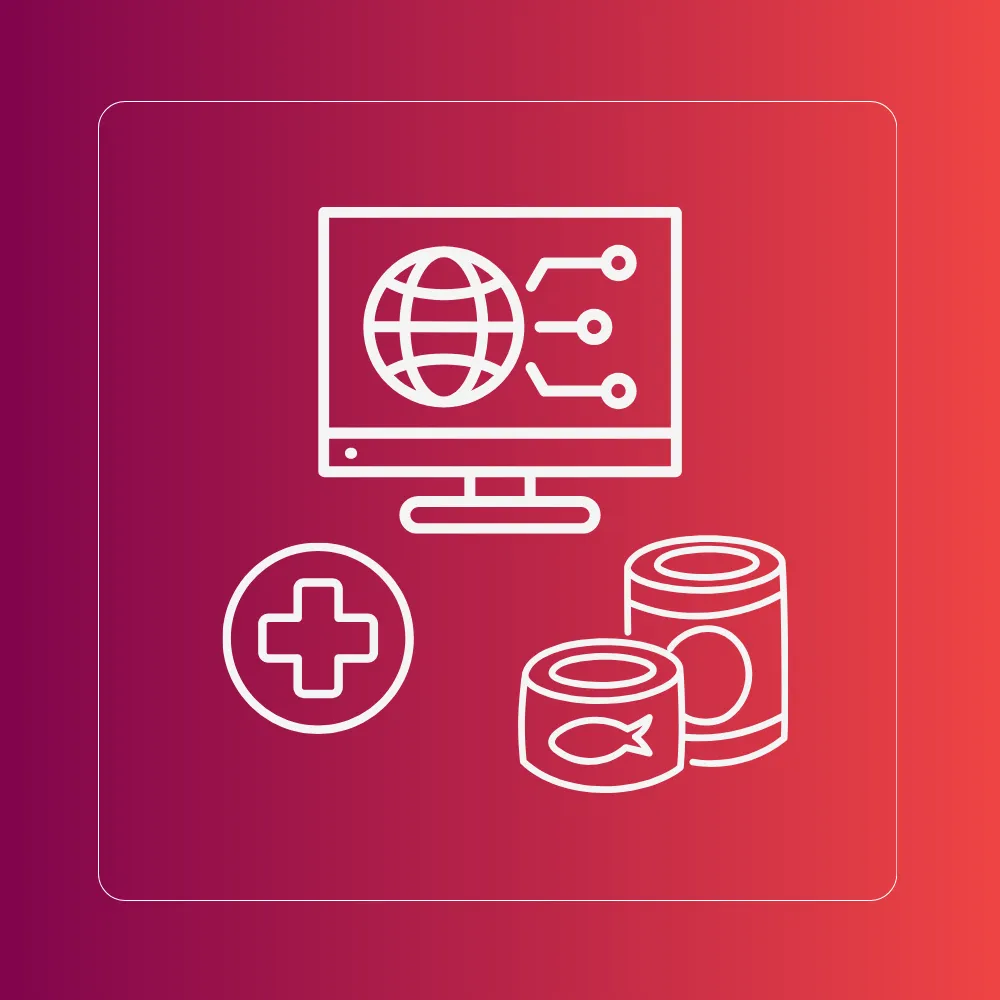
Because of the strict screening, traditional financials play practically no role in Islamic ETFs. The focus is typically on the following sectors:
-
Technology
-
Healthcare
-
Consumer staples
Despite global diversification, this sector shift leads to more concentration than in conventional benchmarks such as the MSCI World.
That need not be a bad thing: in some market phases, the overweight in technology and healthcare has a favourable effect on the performance of Islamic ETFs.
The value of your investment can fluctuate.
Article published by Prosperity Solutions AG
More topics to deepen your knowledge: